

How does leak detection work?
Tim Crisp, Technical Communications Specialist
July 29, 2026
Hidden water leaks are one of the greatest challenges facing water utilities today. While some leaks eventually surface, many remain concealed beneath streets, sidewalks, and landscaped areas for months—or even years—wasting millions of gallons of treated drinking water and increasing non-revenue water losses. Finding these hidden leaks requires more than simply listening for running water; it requires specialized equipment, a systematic approach, and experienced technicians who understand how water distribution systems behave.
Acoustic leak detection has long been recognized as one of the most effective methods for locating underground leaks. By combining advanced electronic listening equipment with skilled interpretation, utilities can identify leak before they become costly main breaks or significant sources of water loss.
Listening to the Sound of a Leak
Whenever pressurized water escapes through a crack, corrosion pit, failed gasket, or leaking joint, it creates vibrations. These vibrations travel through the water inside the pipe, along the pipe wall, and into the surrounding soil. The resulting sound is unique from the operating noises within the distribution system and can be detected with highly sensitive acoustic equipment.
Every leak produces its own acoustic signature. Factors such as pipe material, pipe diameter, operating pressure, leak size, and surrounding soil conditions all influence how the sound travels. Metallic pipes often carry leak noise over long distances, while PVC and other plastic pipes absorb much of the sound, making leaks more difficult to locate. Even weather conditions, nearby traffic, or customer water use can affect what technicians hear.
Understanding these variables is essential to accurately interpreting the sounds collected during a survey.
From Sound to Leak Location
An acoustic leak survey typically begins at accessible contact points such as fire hydrants, valves, and service connections. These locations provide a direct path for sound to travel from the pipeline to the listening equipment.
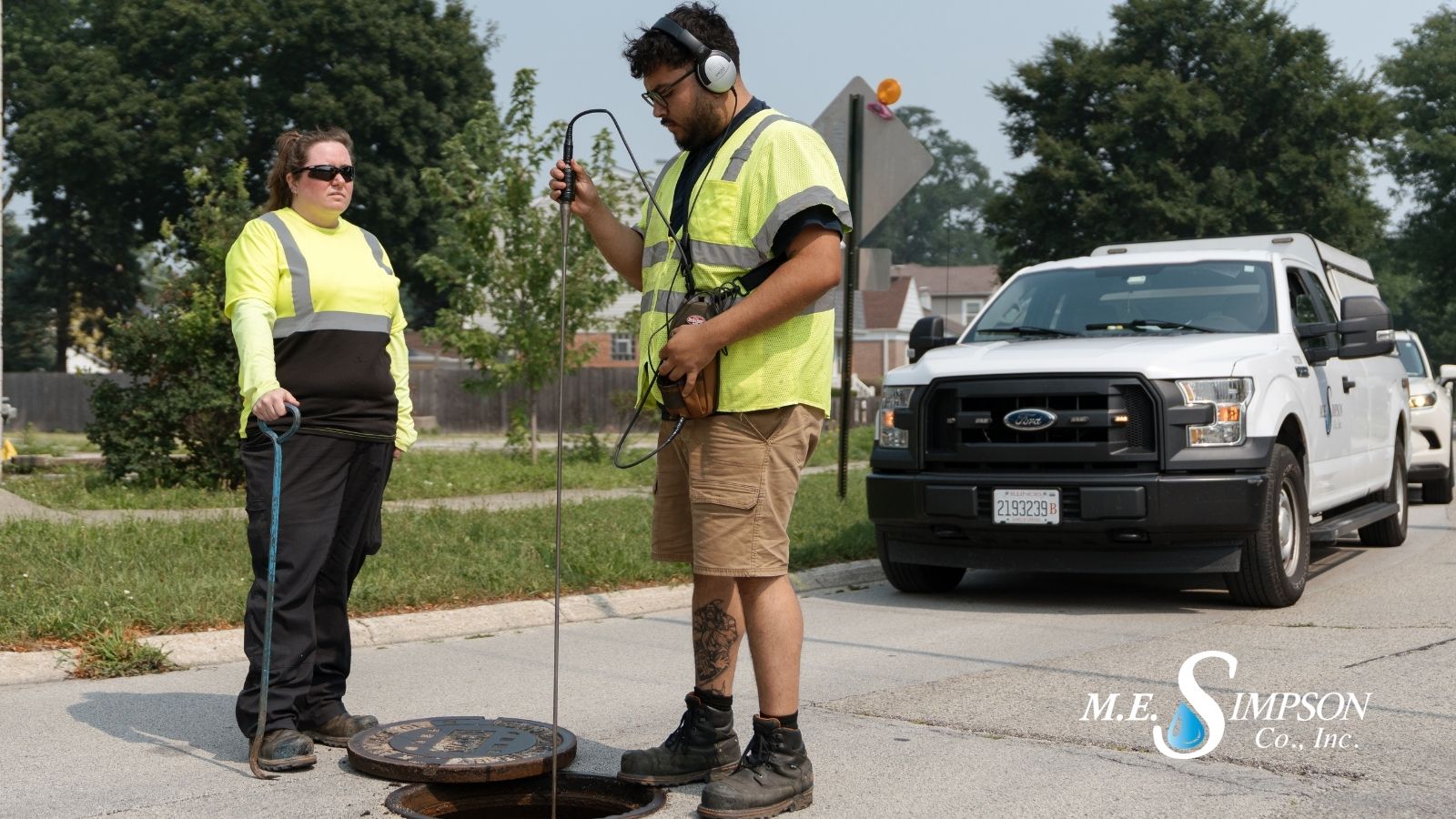
Electronic ground microphones amplify subtle underground sounds while filtering much of the surrounding environmental noise. Technicians compare sound intensity and frequency at multiple locations, gradually narrowing the suspected leak area.
When greater precision is needed, leak correlators are often used. Sensors are placed at two separate points on the pipeline, where they record the same leak noise. The correlator analyzes the difference in arrival time between two sensors and calculates the leak’s location with remarkable accuracy. This approach is particularly effective on long transmission mains and in situations where multiple background noises make conventional listening more challenging.
Technology Is Only Part of the Solution
Modern leak detection equipment is very sophisticated, but equipment alone does not locate leaks. Successful acoustic leak detection depends on the experience of the technician interpreting what the equipment is hearing.
Water distribution systems are full of competing noises. Pumps cycle on and off, pressure-reducing valves create turbulence, and external vibrations from traffic or construction can mask or mimic leak sounds. Experienced leak detection specialists learn to distinguish these sounds and recognize the subtle characteristics that indicate a genuine leak.
For over 40 years, M.E. Simpson Co., Inc. has helped utilities locate hidden water loss using proven acoustic leak detection methods. Over decades of surveying thousands of miles of water distribution systems, our technicians have developed the field experience necessary to accurately identify leaks under a wide variety of system conditions. That experience allows us to maximize the effectiveness of today’s advanced leak detection technologies while minimizing unnecessary excavation and disruption.
Protecting Water Infrastructure
The greatest value of acoustic leak detection lies in its ability to find problems before they become emergencies. Early leak identification reduces water loss, lowers treatment and pumping costs, minimizes damage to surrounding infrastructure, and helps utilities prioritize repairs before failures become more costly and severe.
Accurate leak locations allow repair crews to excavate only where necessary, reducing restoration costs and shortening repair times. Combined with proactive asset management and routine water loss control programs, acoustic leak detection helps utilities extend the service life of their infrastructure while improving system reliability.
As water systems continue to age and utilities face increasing pressure to conserve resources, acoustic leak detection remains one of the most practical and cost-effective tools available. By pairing advanced technology with experienced field professionals, utilities can make informed maintenance decisions, reduce non-revenue water, and provide more reliable service to the communities they serve.