

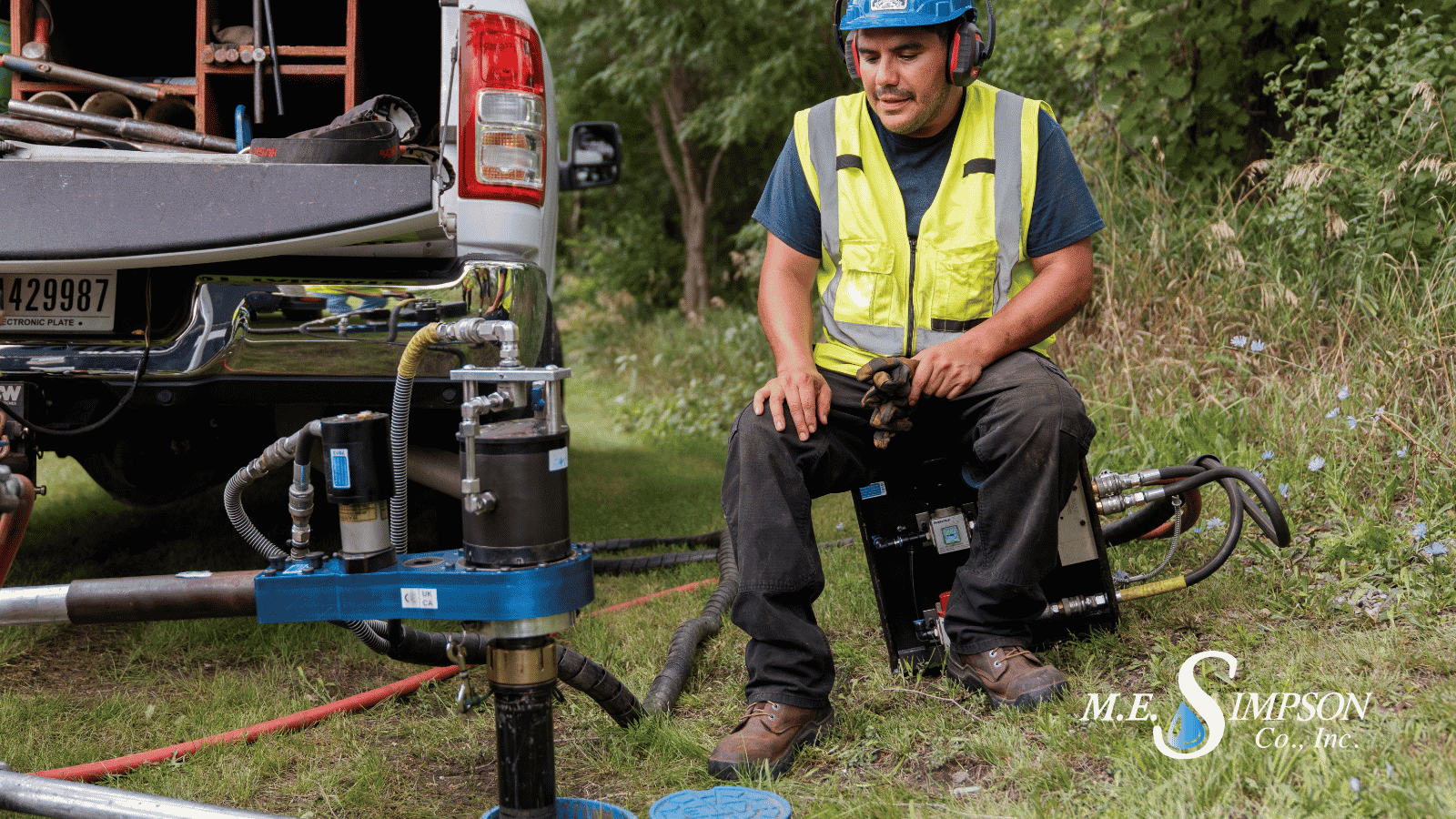
From Valve Exercising to HydroV®: Keeping Water Distribution Valves Operational
By Mackenzie App-Furcinito, Regional Manager Northeast – M.E. Simpson Co., Inc.
September 29, 2026
Water distribution valves are among the most important, and often overlooked, assets in a municipal water system. Utilities depend on these valves to operate properly when a water main breaks, a pressure zone must be isolated, or emergency repairs are required. Yet a valve that has not been operated for years may be difficult to turn, partially inoperable, or completely seized when it is needed most.
A systematic valve exercising program is a fundamental part of preventative maintenance and effective water distribution system management. Routine water valve exercising helps utilities identify operating problems before an emergency occurs, maintain accurate valve records, and make informed decisions regarding valve maintenance, rehabilitation, and replacement.
How Often Should Water Valves Be Exercised?
There is no single valve exercising frequency that applies to every valve in every water distribution system. A utility’s valve maintenance program should account for the criticality, age, condition, location, and operating history of each valve.
AWWA Manual M44, Distribution Valves: Selection, Installation, Field Testing, and Maintenance, emphasizes the importance of establishing a systematic program for valve operation and maintenance. AWWA guidance encourages utilities to establish annual valve exercising goals and a timeframe for testing valves throughout the distribution system.
EPA guidance has similarly recommended operating distribution system valves through a full cycle on a routine basis while maintaining records of the exercise, including the date and number of turns required.
For many utilities, exercising every water valve annually may not be practical. A risk-based valve exercising program can provide a more manageable approach while ensuring that critical assets receive appropriate attention.
Valves serving critical facilities, transmission mains, major distribution mains, pressure zones, and other strategically important areas may warrant more frequent inspection and exercising. Older valves and valves with a history of operating problems may also require additional attention.
The most important consideration is not simply how often a valve is turned. It is whether the utility has a systematic water valve maintenance program that verifies critical valves will operate when needed.
Valve Exercising Is More Than Turning a Valve
A comprehensive water valve exercising program provides utilities with an opportunity to gather valuable information about the condition of their distribution system.
During valve exercising, field personnel can:
- Verify valve location and accessibility
- Confirm operating direction
- Record the number of turns
- Evaluate operating torque
- Identify problems with the operating nut or valve stem
- Assess the valve box and surrounding infrastructure
- Document valves that require maintenance or further investigation
The information collected during valve exercising can then be incorporated into a utility’s GIS, CMMS, or other water utility asset management system.
Perhaps most importantly, valve exercising can identify an operating problem while there is still time to address it.
A valve that requires excessive torque or cannot be completely opened or closed should not simply be recorded as an inconvenience. It may represent a significant system reliability issue. If the valve is later required to isolate a water main during an emergency, its condition could substantially increase the time, cost, and effort required to complete repairs and restore service.
What Happens When a Water Valve Is Seized?
Routine valve exercising is intended to help prevent valves from becoming neglected or inoperable. However, even well-maintained water distribution systems can contain valves that become difficult or impossible to operate.
Common causes of a seized water valve can include:
- Corrosion
- Mineral deposits
- Sediment and debris
- Mechanical deterioration
- Age
- Long periods without operation
- Internal valve damage
When a valve will not move, applying excessive force with conventional valve exercising equipment can increase the risk of damaging the valve, operating nut, stem, or other components.
Fortunately, a seized valve does not necessarily mean excavation and replacement are the only options.
HydroV® Seized Valve Release System
M.E. Simpson Co., Inc. provides specialized seized valve release services using Hydrosave’s patented HydroV® Valve Release System.
HydroV® is specifically designed for stuck or seized valves that cannot be operated using conventional valve exercising methods.
Instead of simply applying increasing amounts of torque, the HydroV® system identifies the resonant frequency of the seized valve and applies controlled torque and vibration to help release it.
This controlled approach is designed to persuade the valve to move while reducing the potential for damage associated with excessive mechanical force.
In many situations, HydroV® seized valve release can allow a utility to recover an existing valve without immediately resorting to excavation, replacement, service disruption, and the associated expense.
From Seized Valve Release to Better Asset Management
Once a seized valve has been successfully released, it can be exercised, inspected, and evaluated as part of the utility’s broader valve management program.
Information collected in the field can help identify valves requiring:
- Additional maintenance
- More frequent exercising
- Rehabilitation
- Repair
- Eventual replacement
This makes seized valve release an important component of a broader water utility asset management strategy.
Rather than treating an inoperable valve as an isolated emergency problem, utilities can use the information gathered during valve exercising and HydroV® service to better understand the condition of their overall valve inventory and prioritize future maintenance and capital improvements.
Real-World HydroV® Valve Release Results
M.E. Simpson Co., Inc.’s experience with the HydroV® Valve Release System has demonstrated its ability to address water distribution valves that could not be operated using conventional methods.
In Wilmington, Delaware, a seized 16-inch gate valve was successfully released in approximately 45 minutes.
In Bensenville, Illinois, a frozen 12-inch valve was released in approximately 45 seconds, allowing the utility to regain operation of the valve and identify additional issues requiring attention.
With HydroV®, a seized water valve does not necessarily have to be replaced simply because it will not move.
Keep Water Distribution Valves Ready Before an Emergency
A water distribution valve is an emergency-response asset. Its true value becomes apparent when a utility must isolate a water main, control a portion of the distribution system, or respond to an unexpected failure.
Routine valve exercising and valve condition assessment give utilities the opportunity to verify that valves are accessible, documented, and operational before they are needed.
A systematic valve exercising program also creates a foundation for stronger asset management by documenting valve condition, operating characteristics, maintenance requirements, and repair priorities.
When routine exercising identifies a valve that cannot be operated, HydroV® seized valve release may provide an alternative before excavation and replacement become necessary.
M.E. Simpson Co., Inc. combines decades of water distribution system experience with specialized valve exercising, valve assessment, and seized valve release services. Through conventional valve exercising and Hydrosave’s HydroV® Valve Release System, M.E. Simpson helps utilities improve valve reliability, identify maintenance needs, protect critical infrastructure, and keep water distribution system assets ready for the moment they are needed most.
About the Author
Mackenzie App-Furcinito is a Regional Manager with M.E. Simpson Co., Inc., where she works with water utilities to support distribution system maintenance, asset management, and infrastructure reliability. Her experience includes helping utilities evaluate and implement solutions for valve exercising, water loss control, and other critical water system needs. Learn more about Mackenzie and the areas she serves here.