Leak Detection and Condition Assessment of a Transmission Main in Wilmette, IL
How M.E. Simpson and Aganova used Nautilus® technology to assess a
critical water transmission main without interrupting service.
Tim Crisp, Technical Documentation Specialist
November 12, 2026
Large-diameter water transmission mains are among the most critical assets in a utility’s distribution system. Yet understanding their condition can be challenging, particularly when pipelines are buried beneath developed areas, have limited access points, or cannot easily be removed from service for inspection.
Traditional water main leak detection methods may struggle to identify hidden leaks and other anomalies in large-diameter pipelines. Without accurate condition data, utilities may be forced to make maintenance and capital improvement decisions based on pipe age, material, and historical performance rather than actual field conditions.
Through our partnership with Aganova, M.E. Simpson Co., Inc. is helping utilities overcome these challenges with advanced in-line leak detection and pipeline condition assessment technology. A recent project in the Village of Wilmette, Illinois, demonstrates how Aganova’s Nautilus® technology can provide valuable insight into critical water infrastructure while maintaining normal system operations.
Project Purpose
The Village of Wilmette is a suburb of Chicago which operates a transmission network that plays a critical role in the water supply. In March 2026, M.E. Simpson Co., Inc. in collaboration with Aganova, carried out an inline inspection using Nautilus technology on a 24-inch transmission main located in the center of Wilmette, IL (USA). The pipeline inspected was a large diameter pipe that the Village wanted to gauge degredation in order to determine the time and priority to put on repair or replacement of this critical asset.
The objective of the project was to assess the pipeline’s condition under normal operating conditions, enabling the detection, classification, and localization of potential leaks, air pockets, and anomalies without interrupting service.
The inspection covered a total length of 5,765 ft and was conducted under stable hydraulic conditions, with relatively constant flow rate and velocity throughout the inspection.
———————————-
To address this need, an inline inspection was carried out using Nautilus technology on a 24-inch transmission main located in the center of Wilmette,
with the collaboration of our technology partner, Aganova in March 2026.
———————————
The Village of Wilmette operates a water transmission network that plays an essential role in delivering reliable water service to its community. As part of its proactive asset management efforts, the Village sought to evaluate the condition of a 24-inch cast iron transmission main located in the center of Wilmette. The challenge was to identify potential hidden leaks, trapped air, and other pipeline anomalies without disrupting water service or compromising normal system operations.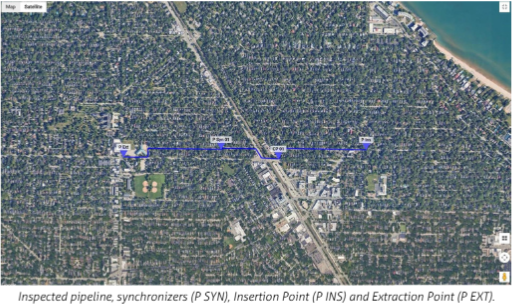
With limited visible indications of potential defects, the Village needed a reliable inspection approach capable of collecting accurate information from inside the operating pipeline. Working with Aganova and M.E. Simpson, the Village selected Nautilus® in-line inspection technology to evaluate this critical infrastructure.
Additionally, the detection of non-visible incidents required a high-precision solution capable of operating under real hydraulic conditions and providing reliable results even in the absence of surface indications.
Solution and Implementation
In preparation for the Wilmette project, M.E. Simpson worked with the Village and Aganova to review existing pipeline information, including GIS records, system maps, and operating conditions. Our field team helped establish insertion and extraction locations, identify equipment and tracking requirements, and complete the
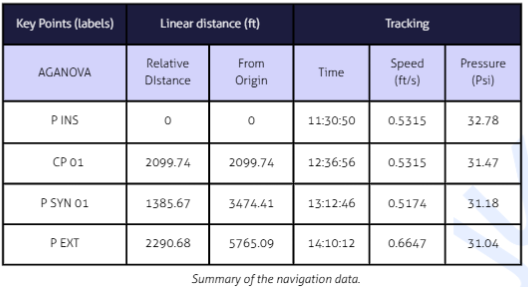 necessary preparations for deployment. In March 2026, the Nautilus® sensor was introduced through a hydrant connection and traveled through the transmission main under controlled operating conditions. Specialized tracking equipment monitored the sensor’s progress through the pipeline, allowing inspection data to be associated with locations along the transmission main.
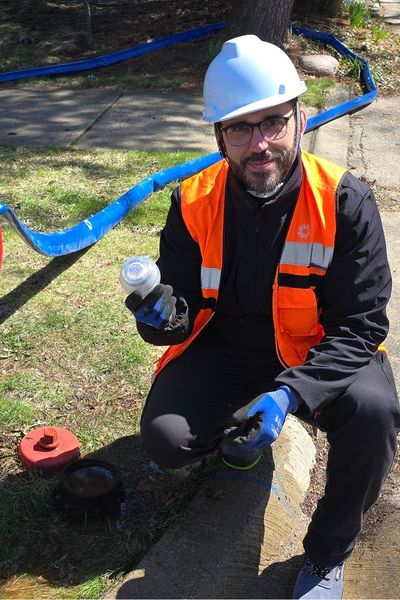
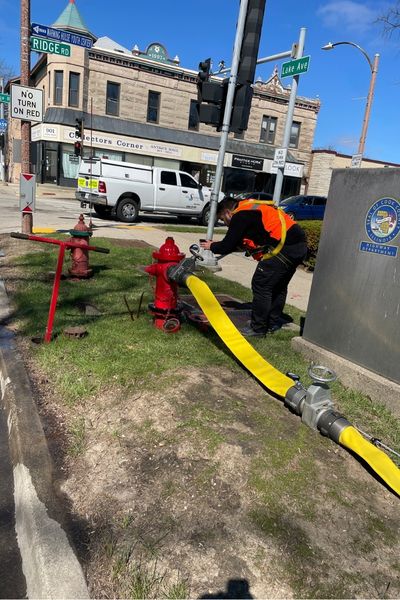
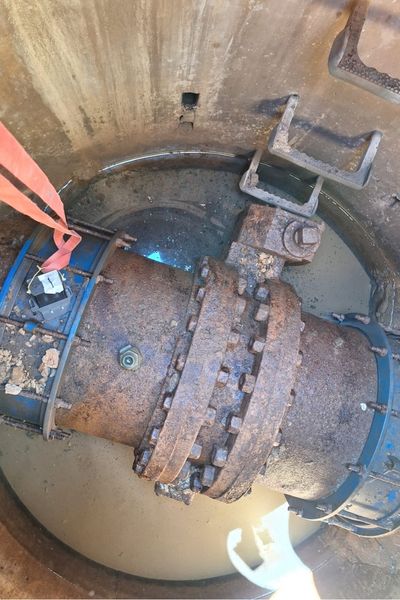
Pictures Left to Right: Operator holds Aganova Nautilus sensor, Installation of synchronizers along pipeline at the insertion point, Installation of synchronizers to ensure precise location of defects
- Hidden leaks that may not be detectable from the surface
- Air pockets and trapped gas
- Potential blockages and other pipeline anomalies
- Indicators of sediment accumulation and possible deterioration
Unlike inspection methods that require taking a pipeline out of service, Nautilus® operates under live-flow conditions, allowing utilities to assess critical infrastructure with minimal disruption.
For large-diameter water transmission mains, this approach provides an opportunity to gather meaningful condition data without the extensive operational impacts associated with conventional inspection methods.
The Results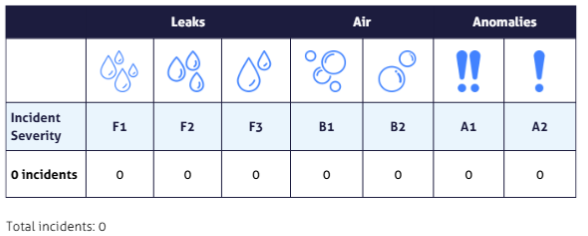
The analysis of the collected data did not identify any incidents along the inspected cast iron pipe section, and the acoustic signals recorded were consistent with normal inspection activities. These results confirm the integrity of the pipeline and indicate no evidence of hydraulic or structural issues affecting the inspected section.
Approximately 5,765 ft of pipeline were inspected, and no leaks, air pockets, or anomalies were identified within the inspected section. The results confirm the integrity of the pipeline and its stable hydraulic performance.
Gain Confidence in Your Underground Infrastructure
You can’t always see what’s happening inside a buried water transmission main. But with the right technology and experienced professionals, you can gain valuable insight into its condition.
Whether you’re investigating suspected leaks, evaluating aging infrastructure, or developing a long-term capital improvement plan, M.E. Simpson can help identify the right assessment approach.
Ready to take the guesswork out of your pipeline condition assessment?
Contact M.E. Simpson Co., Inc. to discuss your infrastructure challenges and learn how our advanced leak detection and pipeline condition assessment services can help you make confident, data-driven decisions.